Germany Airport Strike: 510,000 Travelers Stranded as 3,400 Flights Cancelled Nationwide
Germany experienced its largest aviation disruption in years. On January 14, 2026, workers at 13 major airports went on strike—affecting more than half a million travelers. Frankfurt, Munich, Berlin, Hamburg: all major hubs were paralyzed. Ver.di union demands an 8% wage increase. The next round of negotiations approaches—and more strikes loom.

Short on time? ⚡ Read the quick summary.
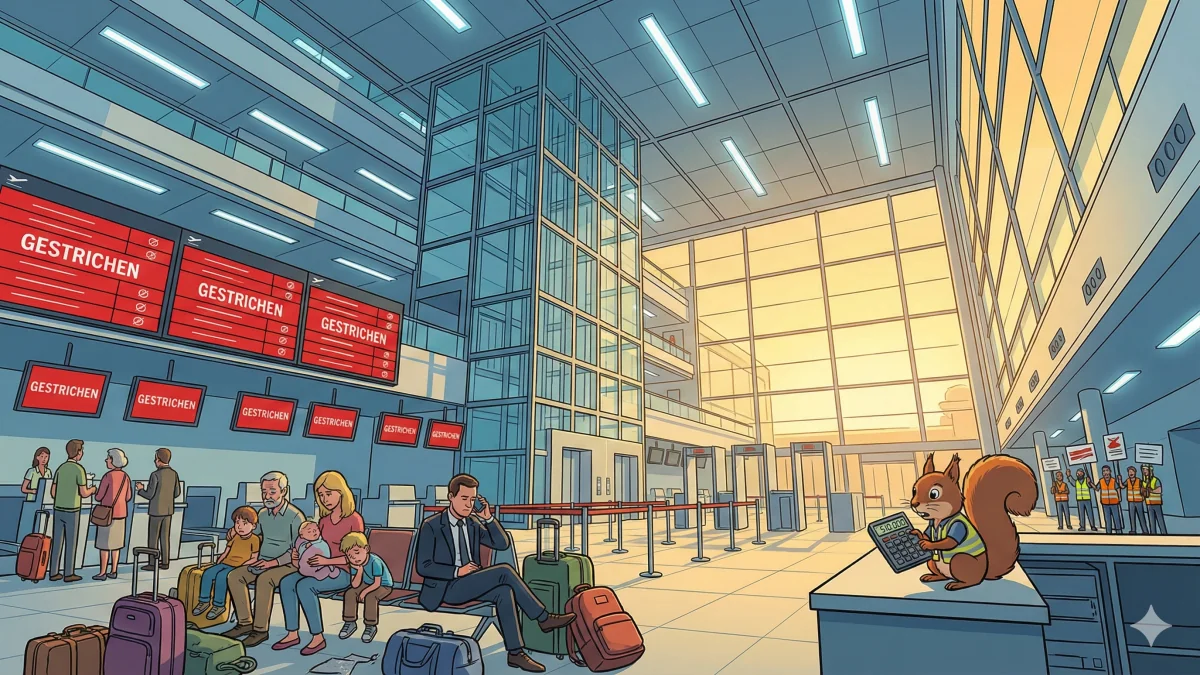
Chaos at German airports: A 24-hour strike paralyzes air traffic.
🇬🇧🇺🇸 Context for English Speakers
Why is this a big deal? Germany is Europe's central aviation hub. When Frankfurt and Munich go dark, it affects not just German travelers but international connections to the US, UK, Asia, and across Europe.
What is Ver.di? Ver.di is Germany's largest public sector union, representing 2.5 million workers including airport security, baggage handlers, and check-in staff.
EU Passenger Rights: Under EU Regulation 261/2004, passengers are entitled to rebooking, meals, and hotel accommodation when flights are cancelled—but external strikes like this don't trigger cash compensation.
Key Takeaways
- 3,400+ flights cancelled: Airport association ADV estimates over 3,400 departures and arrivals were scrubbed. VisaHQ
- 510,000 passengers affected: Roughly half a million travelers had to rebook, wait, or leave luggage at airports. VisaHQ
- 13 airports hit: Frankfurt, Munich, Berlin-Brandenburg, Hamburg, Stuttgart, Düsseldorf, Cologne/Bonn, Dortmund, Hanover, Bremen, and Leipzig/Halle. Airways Magazine
- Ver.di demands 8% raise: Or a minimum €350/month increase for ground staff and security personnel. VisaHQ
- Next negotiation round: March 26—Ver.di threatens further strikes. VisaHQ
What Happened?
On Tuesday, January 14, 2026, the Ver.di union called for a 24-hour warning strike at Germany's largest airports. Affected: public sector employees and private ground handling services—security personnel, baggage handling, check-in, and passenger screening.
Result: near-total shutdown. Frankfurt Airport (FRA), Germany's largest hub, confirmed no departures were possible. Berlin-Brandenburg (BER) cancelled all 246 scheduled flights. Munich Airport (MUC) warned of a "drastically reduced flight schedule." Hamburg (HAM) was completely shut—a weekend strike prior had already stranded 40,000 passengers.
Airport association ADV called it a "nightmare scenario."
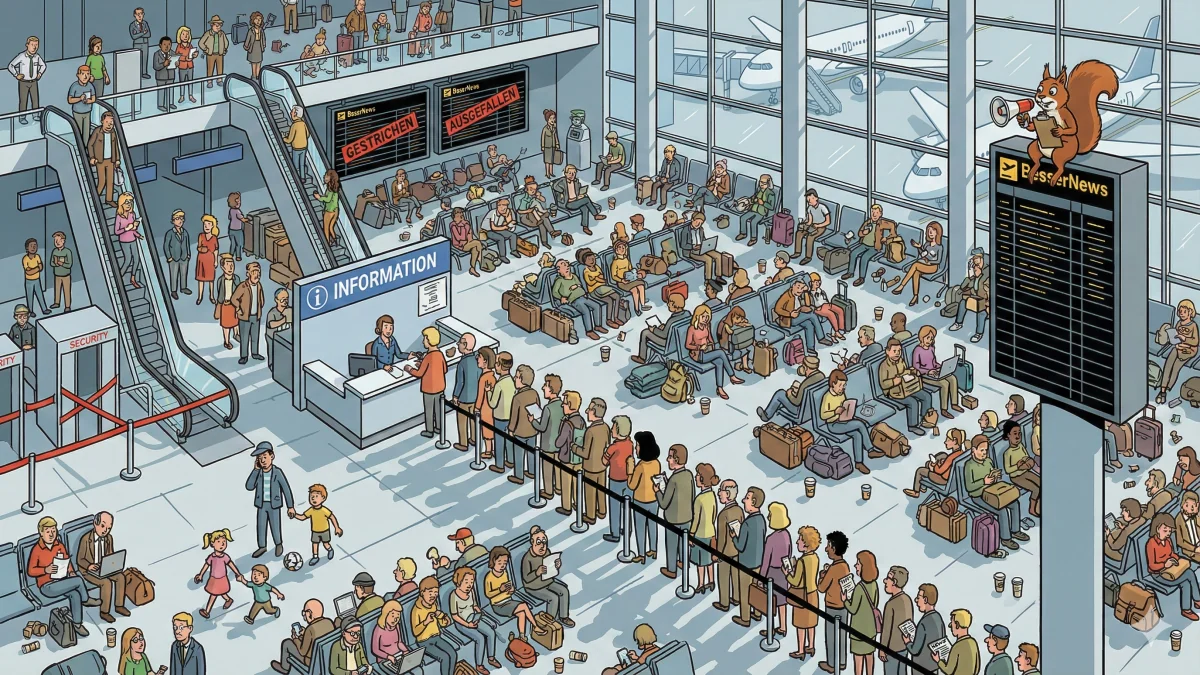
Test of patience: Hundreds of thousands of travelers were stranded or forced to rebook.
Why This Matters
This isn't just about 510,000 people who couldn't fly on a single day. It's about business travelers who missed crucial meetings. Families whose vacations collapsed. International connections that broke down—especially for flights to the US, UK, and within Europe.
Germany is a central hub in European air traffic. When Frankfurt and Munich stop, the impact extends far beyond Germany's borders.
What's Really at Stake
Ver.di represents 2.5 million public sector workers. The union demands:
- 8% wage increase—or at least €350 per month
- Higher bonuses for particularly demanding jobs
- Additional vacation days
Employers reject this. Their argument: Airports are still recovering financially from the pandemic. Operating costs have risen, margins are thin.
Ver.di says: Workers held on during Corona, often under difficult conditions. Now they need fair pay.
International Impact
US travelers were hit especially hard. Lufthansa, United Airlines, American Airlines, and Delta had to cancel flights to New York, Boston, Washington, Chicago, San Francisco, Dallas, Charlotte, Atlanta, and Minneapolis.
Turkish Airlines cancelled connections to nine German cities: Berlin, Hamburg, Hanover, Düsseldorf, Frankfurt, Cologne, Leipzig, Bremen, and Munich.
Even cargo traffic was affected: perishable goods and high-value shipments (e.g., auto parts, pharmaceuticals) couldn't get through. Frankfurt is a central logistics hub for European industry.
What Can Travelers Do?
- Check flight status: At least 48 hours before departure via airline website
- Plan alternative routes: For international flights: consider Amsterdam, Zurich, or Paris as transfer options
- Know your rights: EU Regulation 261/2004 applies—but external strikes (like this) count as "extraordinary circumstances." Meaning: no cash compensation, but right to rebooking, meals, and possibly hotel
- Document everything: Keep boarding passes, cancellation notices, and receipts for extra costs
Outlook: More to Come?
January 14 was just a warning strike. The crucial negotiation round is scheduled for March 26.
Ver.di has already announced: If employers aren't willing to make concessions, strikes will escalate. That could mean:
- Multi-day strikes at individual airports
- Coordinated actions with other sectors (e.g., public transit)
- Strikes during Easter or summer holidays—peak travel season
Travelers should prepare: Anyone flying through German airports in the coming months should book flexible tickets and plan alternative routes.
Sources: VisaHQ · Airways Magazine · Travel And Tour World