Germany Airport Strike: 510,000 Travelers Stranded

Want more details? 📄 Read the full version.
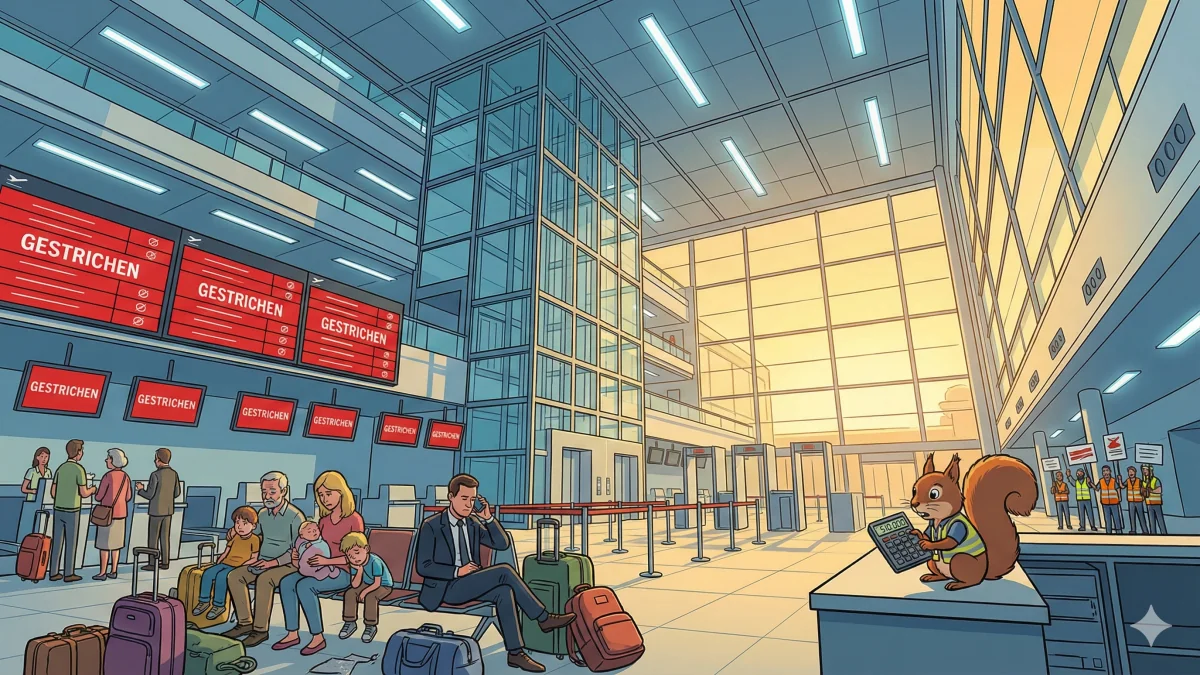
Chaos at German airports: Ver.di strike paralyzes air traffic.
What Happened?
On January 14, 2026, airport workers at 13 major German airports went on strike. Result: Over 3,400 flights cancelled. About 510,000 travelers couldn't fly.
Affected: Frankfurt, Munich, Berlin, Hamburg, Stuttgart, Düsseldorf, Cologne/Bonn, Dortmund, Hanover, Bremen, and Leipzig/Halle.
The strike lasted 24 hours and nearly shut down all airports.
Key Facts
- 3,400+ flights cancelled
- 510,000 passengers affected
- 13 airports paralyzed
- Ver.di demands 8% pay raise (or at least €350/month)
- Next negotiation: March 26—more strikes possible
Why Are They Striking?
The Ver.di union represents airport workers—security personnel, baggage handlers, and check-in staff. They demand:
- 8% wage increase—or at least €350 more per month
- Higher bonuses for demanding work
- More vacation days
Employers say: "We can't afford this. Many airports are still struggling with pandemic aftereffects."
Ver.di says: "Our people held on during Corona. Now they need fair pay."
Why Does This Matter?
Germany is a central hub for European flights. When Frankfurt and Munich shut down, it doesn't just affect German travelers—but also international connections to the US, Asia, and across Europe.
Especially hard hit: US flights to New York, Boston, Chicago, San Francisco. Turkish Airlines also cancelled flights to nine German cities.
More Strikes Coming?
Yes, possibly. January 14 was just a warning strike. The crucial negotiation round is on March 26.
Ver.di announced: If employers don't give in, strikes could escalate—possibly even during Easter or summer holidays.
What Can Travelers Do?
- Check flight status 48 hours in advance
- Book flexible tickets
- Plan alternative routes (e.g., via Amsterdam or Zurich)
- If cancelled: right to rebooking, meals, possibly hotel
Sources: VisaHQ · Airways Magazine