Gelsenkirchen: AfD Politician Elected as Deputy Mayor

Summary: In Gelsenkirchen, an AfD candidate received votes from other parties and defeated the CDU candidate.
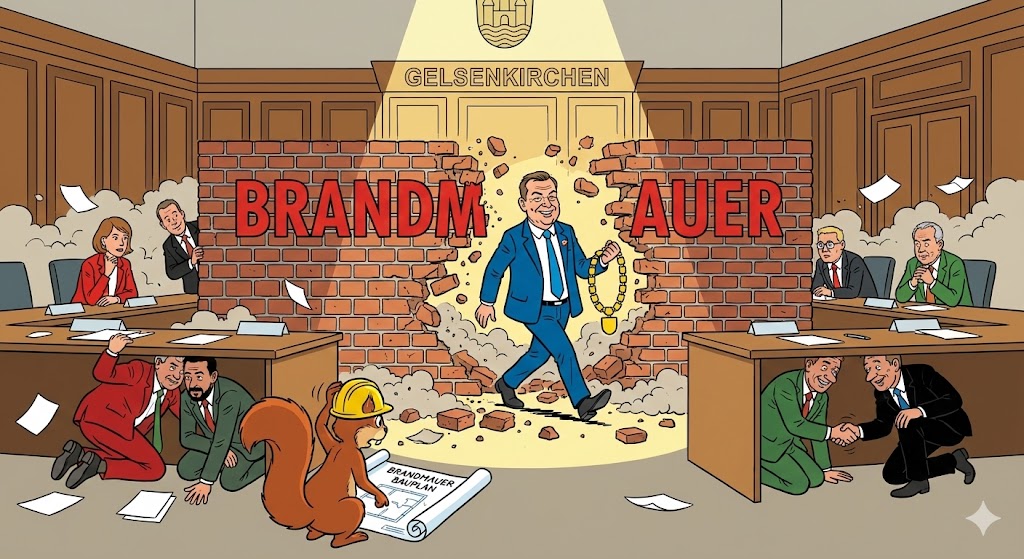
Decision in the council: The deputy mayor election raises questions about voting behavior.
🇬🇧🇺🇸 Context for English Speakers
What is the AfD? Alternative für Deutschland (Alternative for Germany) is a far-right party that entered the Bundestag in 2017. Germany's domestic intelligence agency monitors parts of the party as "right-wing extremist." Other parties have maintained a "firewall" (Brandmauer) refusing to cooperate with the AfD – similar to the French "cordon sanitaire" against the National Rally.
Deputy Mayor vs. Mayor: In German cities, the Mayor (Oberbürgermeister) is directly elected by citizens. Deputy mayors are elected by the city council – creating a gap where parties with minority support can gain positions through tactical voting.
Gelsenkirchen: A city of ~260,000 in the Ruhr industrial region of North Rhine-Westphalia. Once a coal and steel center, it now has Germany's highest unemployment rate and significant social challenges – conditions where the AfD has gained support.
In Gelsenkirchen, AfD faction leader Norbert Emmerich has been elected as deputy mayor. The result is causing nationwide discussion because Emmerich received more votes than his own party holds seats. The process highlights differences between federal and local politics in how parties handle the AfD.
Key Facts
- Election Result: Norbert Emmerich received 23 votes – three more than the AfD holds seats in the council. At least three council members from other parties voted for him.
- Failed Agreement: SPD and CDU had planned a joint list beforehand to prevent an AfD success. Deutschlandfunk
- Consequence: Through the counting method used, Emmerich finished ahead of CDU candidate Werner Wöll.
- Trend: Similar events recently occurred in Bochum and Bad Salzuflen for deputy positions.
How the Gelsenkirchen Election Unfolded
Last Wednesday, Gelsenkirchen's city council elected its deputy mayors. The 72-year-old Norbert Emmerich succeeded in becoming second deputy mayor. Beforehand, SPD and CDU factions had tried to block an AfD representative through a joint list. However, this plan failed in the secret ballot.
After the election, the CDU criticized the result and voting behavior in the council:
"[A] disaster from the CDU's perspective." — Sascha Kurth, CDU Faction Leader Gelsenkirchen
While Emmerich lost to SPD candidate Andrea Henze in the direct mayoral election with around 33 percent of the vote, the system of indirect election in the council now enabled his entry into the representative office. City of Gelsenkirchen
Differences: Direct Election vs. Council Election
A look at nationwide figures shows a discrepancy between direct elections by citizens and indirect elections in governing bodies.
Direct Elections (Mayors/District Chiefs)
In direct elections where voters decide directly on individuals, the AfD has not yet won any executive top positions in West Germany. In North Rhine-Westphalia and Mecklenburg-Vorpommern, AfD candidates lost their runoff elections in 2025.
However, the party recorded successes in East Germany:
- Sonneberg (Thuringia): Robert Sesselmann was elected as Germany's first AfD district chief in June 2023. LTO, June 2023
- Raguhn-Jeßnitz (Saxony-Anhalt): Hannes Loth has served as full-time mayor since July 2023. taz, July 2023
Indirect Elections (Deputies)
In municipal councils, where secret ballots are often held and seat allocation methods (e.g., D'Hondt) play a role, the AfD more frequently gains positions. Gelsenkirchen is not an isolated case: Landtagsblog
- Bochum-Wattenscheid: Cedric Sontowski was elected as second deputy district mayor in November 2025 – also with votes from other parties. City of Bochum, Nov. 2025
- Bad Salzuflen: Sabine Reinknecht was elected deputy mayor in early November. Spiegel, Nov. 2025 After public criticism, other parties filed a removal motion shortly after. The removal occurred a few days later. Spiegel, Nov. 2025
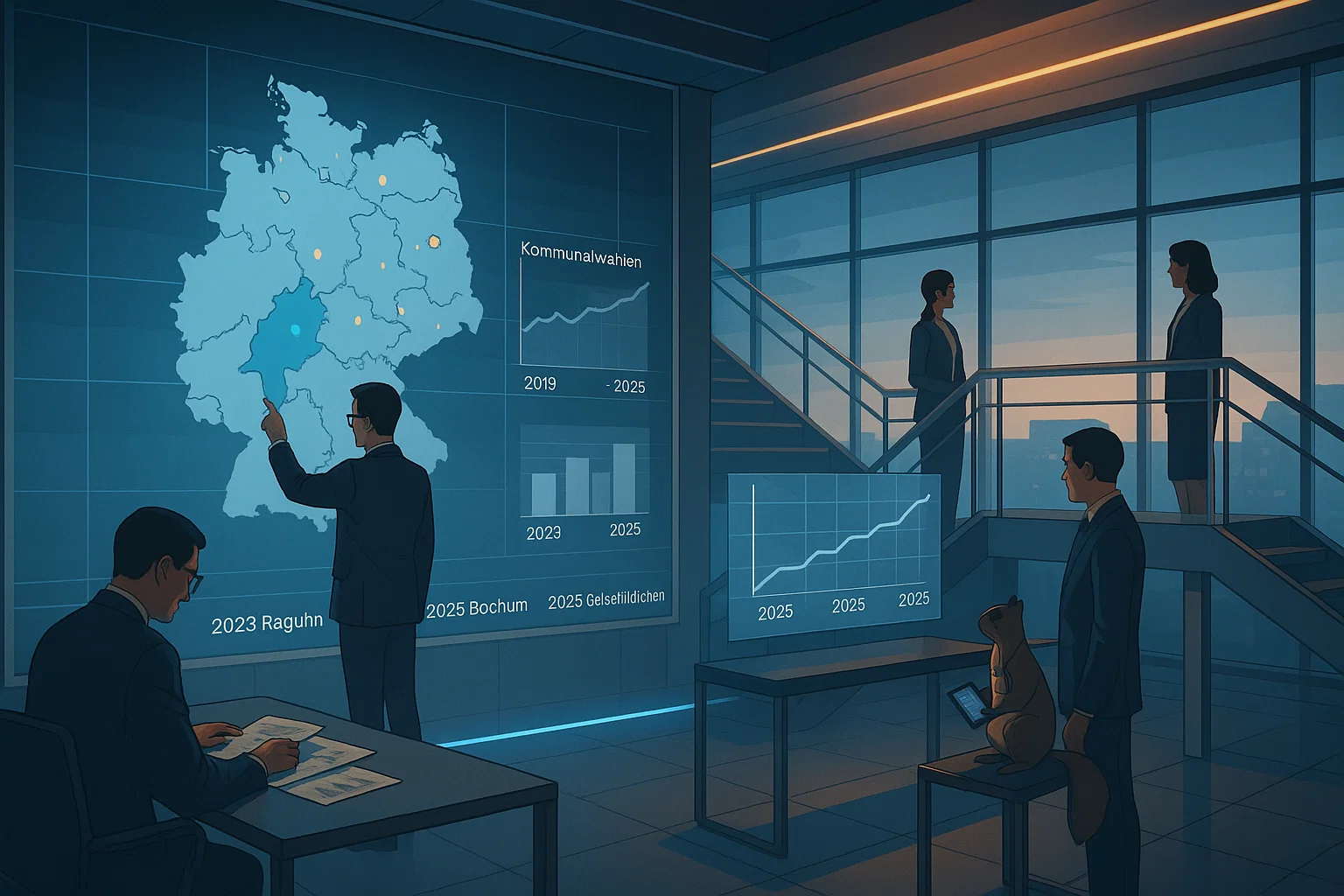
Nationwide perspective: Gelsenkirchen joins a series of similar developments.
Analysis: The "Firewall" at the Local Level
Events in Gelsenkirchen and other municipalities raise the question of how stable the so-called "firewall" – the strict refusal to cooperate with the AfD – is at the lowest political level.
Observers cite several factors for this development:
- Secret Ballots: Unlike in the Bundestag, where roll-call votes are common, secret elections in municipal parliaments protect dissenting council members from sanctions or public criticism.
- Pragmatic Issues: At the local level, practical topics often take center stage, where ideological boundaries sometimes blur. Studies by the Rosa Luxemburg Foundation documented over 120 cases of cooperation at the local level between 2019 and 2024. taz, 2024
The AfD interprets these developments as signs of normalization. North Rhine-Westphalia's AfD state chairman commented on developments in the Ruhr region accordingly:
"AfD mayors are only a matter of time." — Martin Vincentz, AfD State Chairman NRW
Outlook
The coming months will show whether election results like in Gelsenkirchen remain exceptions or whether de facto cooperation establishes itself in municipal parliaments. It also remains open whether – as in the Bad Salzuflen case – subsequent corrections through removal motions occur once results are publicly discussed.