Kevin Kühnert Becomes Lobbyist – And Won't Spare His Own Party
The man who wanted to nationalize BMW is becoming a lobbyist. Kevin Kühnert, SPD Secretary General until October 2024, is back on the political stage – but not as a parliamentarian. He's becoming Head of "Taxes, Distribution, and Lobbying" at the citizens' movement Finanzwende. His promise: "I won't spare party friends either."

Too complex? 🐿️ Read the simplified "Quick & Clear" version.
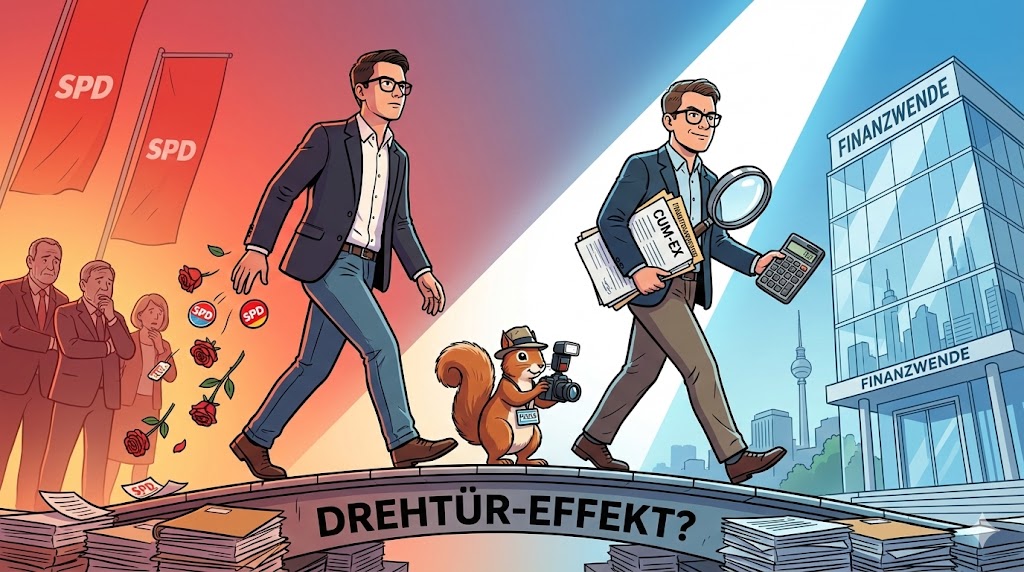
From Youth Wing Leader to Lobbyist: Kühnert leaves SPD politics and joins the citizens' movement.
🇬🇧🇺🇸 Understanding Kevin Kühnert
Kevin Kühnert was the bright young star of Germany's Social Democrats (SPD) – think AOC of the German left, but with actual party power. As head of the Young Socialists, he famously called for nationalizing BMW in 2019, making him a progressive icon.
The SPD is Germany's oldest party, similar to UK Labour (Starmer era) or US Democrats (moderate wing). They're junior partners in the current Grand Coalition with CDU/CSU.
Key Points
- New job: Kühnert becomes department head at the citizens' movement Finanzwende – an NGO fighting against the financial industry. Focus, Dec. 2025
- Declaration of war: On Markus Lanz (major talk show), he announced: "I won't spare party friends either." This is a warning to SPD leadership. FAZ, Dec. 2025
- Health: Kühnert resigned as Secretary General in October 2024 for health reasons. Wikipedia
- FDP reaction: The liberal FDP accuses Kühnert of "financial policy populism." Spiegel, Dec. 2025
- The debate: Is there "good" lobbying? Kühnert says: Yes, when you're fighting for civil society.
The Switch
At first glance, the news seemed like satire: Kevin Kühnert, the left-wing hope of the SPD, the youth leader who called for nationalizing BMW in 2018 – is becoming a lobbyist.
But Kühnert isn't joining a car company or bank. He's becoming department head at the citizens' movement Finanzwende.
Finanzwende (literally "Financial Turn") is an NGO founded by Gerhard Schick (former Green MP). It sees itself as a counterweight to the financial industry. It fights against tax avoidance schemes like Cum-Ex, for financial transaction taxes, and stricter bank regulation.
For Kühnert, this is the logical continuation of his political career – just without a party membership card.
The Debate: Good Lobbying vs. Revolving Door
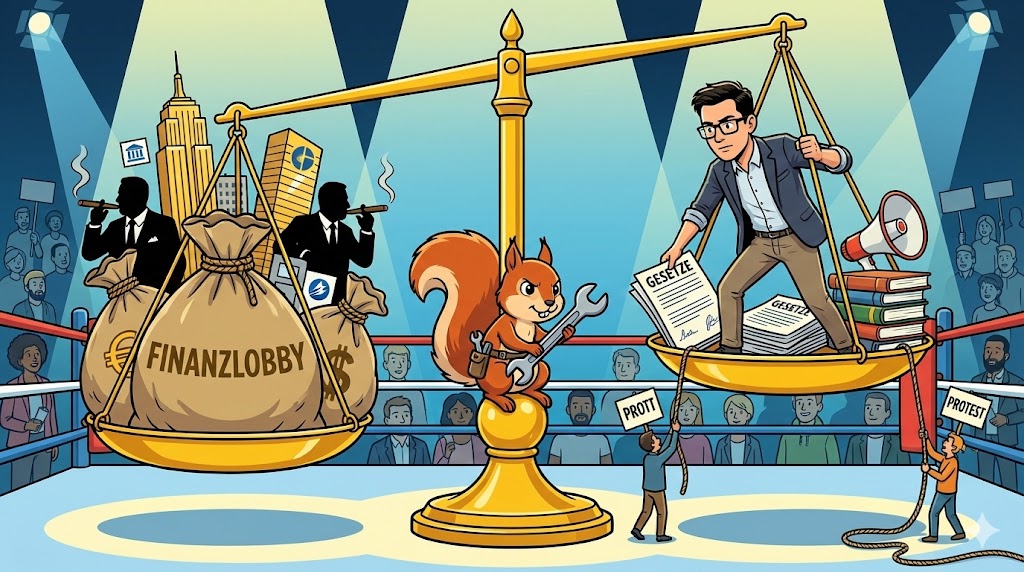
Kühnert tries to balance the scales – against the overpowering financial industry.
The Kühnert case sparks an interesting debate: Is there "good" lobbying?
The classic revolving door effect is viewed negatively: A politician joins the industry they previously regulated, monetizing their insider knowledge. Examples: UK MPs joining consultancies, or German chancellors joining Russian gas companies.
Kühnert argues his switch is different. On Markus Lanz on December 11, he defended himself vigorously:
"I want to actively contribute to making this mammoth project succeed." – Kevin Kühnert on Markus Lanz
His thesis: If the financial industry spends millions on lobbying, civil society needs professionals who understand the mechanisms of power to counter them. It's about leveling the playing field.
The Declaration of War Against the SPD
The most explosive moment of the Lanz interview was Kühnert's announcement:
"I won't spare party friends either." – Kevin Kühnert
This is a declaration of war against SPD leadership. The Social Democrats hold the Labor Ministry (Bärbel Bas) in the Grand Coalition and are part of the government. If the coalition makes rotten compromises with the financial industry – Kühnert will call them out publicly.
For SPD leadership around Lars Klingbeil, this is dangerous. A Kevin Kühnert who, with the credibility of a former Secretary General, rails against "betrayal of social democratic values" from outside can do more damage than any opposition speaker.
Health: The Reason for His Resignation
Kühnert resigned as Secretary General in October 2024 for health reasons. He spoke openly about the physical and psychological burden of the office.
On Lanz, he seemed recovered – and politically liberated. Without party membership, without coalition discipline, without worrying about election results, he can now say what he thinks.
This makes him more dangerous for the SPD, but also more authentic for his supporters.
Reactions: FDP Furious
The FDP (Germany's libertarian-leaning liberals) reacted promptly and allergically. Secretary General Bijan Djir-Sarai accused Kühnert of engaging in "financial policy populism" yet again.
For the liberals, Finanzwende isn't a "counterweight" – it's a left-wing front organization that badmouths Germany as a business location and hampers innovation.
In the SPD, there's awkward silence. Officially, they congratulate him. Unofficially, they fear the "gadfly on duty" who's no longer bound by party discipline.
What Finanzwende Wants
The organization has clear goals:
- Cum-Ex prosecution: Recovering billions lost through tax fraud (a massive German scandal involving dividend stripping)
- Financial transaction tax: Taxation of securities trading
- Stricter bank regulation: Higher capital requirements, limits on bonuses
- Transparency: Disclosure of financial flows and lobbying
With Kühnert, Finanzwende gains a media profile. He can bring the topic to talk shows where normally only bankers and business associations sit.
Outlook: The Extra-Parliamentary Gadfly
Kevin Kühnert is positioning himself as an extra-parliamentary watchdog. He wants to be the thorn in the government's side – including his own party.
This is risky. If he gets too loud, the SPD might brand him a "traitor." If he stays too quiet, he becomes irrelevant.
The coming months will show whether Kühnert finds the balance – between effective pressure and political self-marginalization.