Analysis: Is the AfD a Security Risk? The "Spying Questions" Row

Too complicated? 🐿️ Read the "Short & Clear" version here.
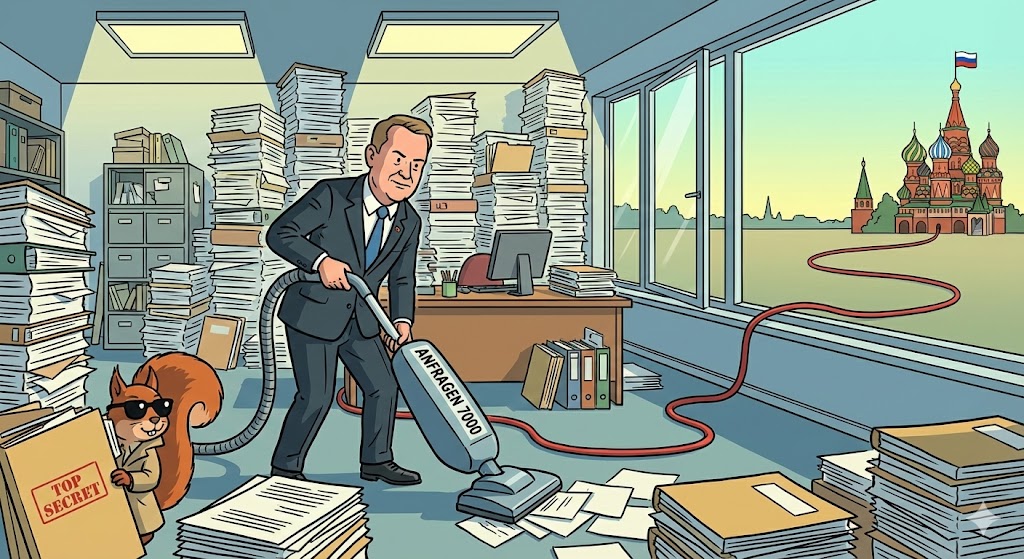
Parliamentary oversight or a service for Moscow? The accusations weigh heavily.
It is one of the harshest accusations one can make against an opposition party: Treason. In the general debate, SPD deputy parliamentary group leader Dirk Wiese attacked the AfD head-on. He claimed they are not using their parliamentary rights to control the government, but to spy on sensitive data for Russia and China. Is there any truth to the allegation?
Key Takeaways
- The Number: Over 7,000 security-relevant parliamentary inquiries filed by the AfD.
- The Accusation: The SPD claims the AfD asks specific questions to gather intelligence for foreign powers.
- The Targets: Questions often concern critical infrastructure, military logistics, and security measures.
- The Context: Recent espionage scandals involving AfD staff members fuel the suspicion.
- The Defense: The AfD rejects this as a distraction maneuver and insists on its right to control the government.
🇬🇧 🇺🇸 Cultural Context
What is a "Kleine Anfrage"?
In the German Bundestag, a "Small Question" (Kleine Anfrage) is a formal written question submitted by a parliamentary group to the government. It's similar to "Written Questions" in the UK Parliament or specific oversight requests in the US Congress. The government must answer them truthfully.
Why is this controversial?
Imagine if a party in the UK House of Commons or US Congress was suspected of using these official channels to ask about the exact location of power grid vulnerabilities, only to pass that info to a hostile nation. That's the scale of the accusation here.
The AfD's Position:
The AfD (Alternative for Germany) is a far-right party, often compared to Reform UK or the MAGA wing of the Republican Party. They are known for being critical of NATO and the EU, and have often advocated for closer ties with Russia.
The Key Number: 7,000 Inquiries
Dirk Wiese (SPD) named a specific number that makes one sit up and take notice: 7,000 security-relevant parliamentary inquiries filed by the AfD faction. These questions concern sensitive topics such as:
- Details on critical infrastructure (power grids, waterworks, pipelines)
- Military logistics and troop movements
- Security precautions in public buildings
- Locations and capacities of military installations
The Accusation: "Holes in the Ship Germany"
Wiese picked up the "Titanic" metaphor that AfD leader Weidel had used earlier and turned it against the AfD:
"The great challenge for the ship Germany is that there are people in the engine room from your party who are trying to punch holes in the ship Germany, because they do not represent German interests, but Russian interests." — Dirk Wiese (SPD), General Debate Nov 26, 2025 [📺 00:36:21]
The accusation is unmistakable: The AfD is not using its parliamentary rights to control the government, but as an information channel for hostile powers.
The Instrument: The "Small Question"
Fundamentally, the "Small Question" is one of the most important tools of the opposition. It forces the government to be accountable. Thousands of such requests are made per legislative period – this is normal and democratically important.
However, security experts have long observed an anomaly with the AfD: The depth of detail in security-relevant topics is unusually high. While other parties ask about the general state of the military, the AfD often demands exact location data, personnel strengths, or deployment plans.
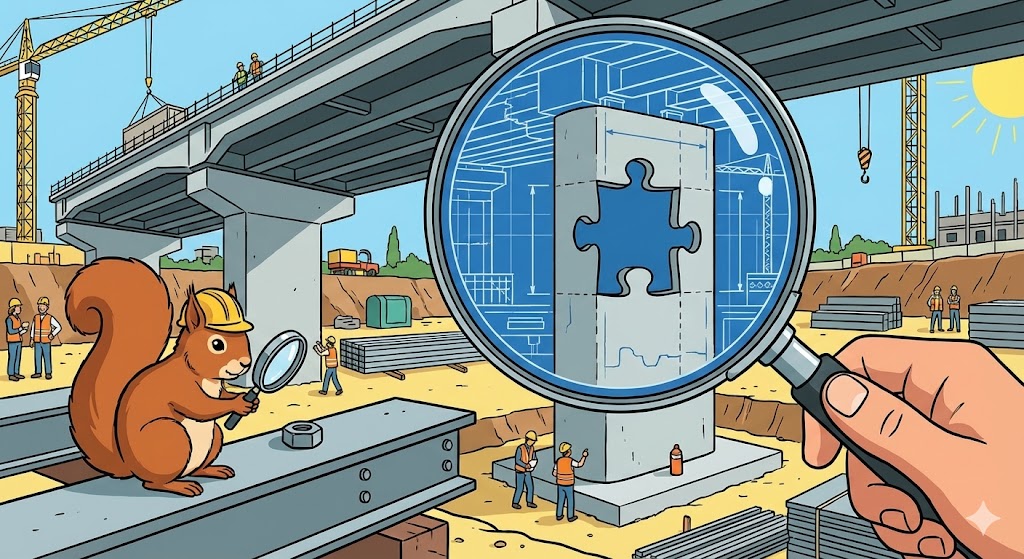
Between transparency and secrecy: The government often has to weigh what it is allowed to answer.
The Context: Espionage Affairs
The accusation does not fall into a vacuum. In recent months, there have been several scandals involving AfD staff and politicians:
The Krah Case: An employee of the AfD's top candidate Maximilian Krah was arrested on suspicion of spying for China. [Tagesschau]
The Bystron Case: MP Petr Bystron was investigated for possible cash payments from a pro-Russian network ("Voice of Europe"). The Bundestag lifted his immunity. [Spiegel]
These incidents fuel the suspicion that the lines between parliamentary work and influence by foreign powers are blurred within parts of the AfD.
The AfD's Reaction
The AfD indignantly rejects the accusations. They see it as a government diversionary tactic to distract from its own failures and to discredit the opposition. The inquiries are necessary to uncover grievances and control the government – that is exactly their job.
Conclusion: A Fine Line
Wiese did not present proof that answers to "Small Questions" flow directly to Moscow. But the political damage is done. The debate shows how much trust in the integrity of Parliament has suffered.
What remains: The number 7,000 hangs in the air. Whether it is a sign of particularly diligent opposition work – or of systematic espionage – will be the subject of further debates.
Chancellor Merz took a clear position on foreign policy orientation in the same debate:
"There is only one aggressor in this conflict." — Chancellor Friedrich Merz, General Debate Nov 26, 2025 [📺 00:54:45]
The implicit message: Whoever stands on the other side of this conflict has no place in the German Parliament.